
Throughout my career, one truth has remained constant: some of the most significant risks in care are not always the most visible.
They are often not the dramatic emergencies that immediately command attention, but the quieter, more complex pressures that develop gradually in the background. A subtle deterioration that may initially appear routine. A medication discrepancy following hospital discharge. An infection risk that escalates through delayed recognition. A safeguarding concern that can easily be missed without the right structures in place.
Having worked across community pharmacy, primary care, prescribing practice, and now clinical governance within care homes, I have seen firsthand how these hidden risks can shape outcomes profoundly. From reviewing complex medication regimes to supporting high-risk residents across nursing environments, one recurring lesson has consistently emerged: the greatest threats to the people we support are often not caused by a lack of care, but by the gaps that can form quietly between systems, communication, and timely intervention.

What makes these risks particularly challenging is that they rarely emerge from a lack of compassion.
More often, they arise from the increasing complexity of care itself.
As care providers, we are supporting individuals with multifaceted health conditions, evolving frailty, polypharmacy, cognitive decline, and increasingly sophisticated clinical needs. In these environments, even highly committed teams can face mounting pressure if the systems surrounding them are not robust enough to identify risk early, guide safe decision making, and support consistent clinical oversight.
For me, this understanding has shaped not only my clinical leadership philosophy, but also my wider contribution to governance, quality assurance, and innovation. Because truly effective care does not begin only when crisis becomes visible. It begins much earlier, often in the systems designed to notice what others may not yet see.
When Clinical Complexity Quietly Increases
Modern care homes are no longer solely environments of social support. They are increasingly sophisticated healthcare settings where residents often present with advanced nursing needs, multiple long term conditions, frailty, cognitive impairment, and significant medication requirements.
This evolution has brought enormous opportunity to deliver more comprehensive, person centred care, but it has also introduced greater layers of clinical responsibility.
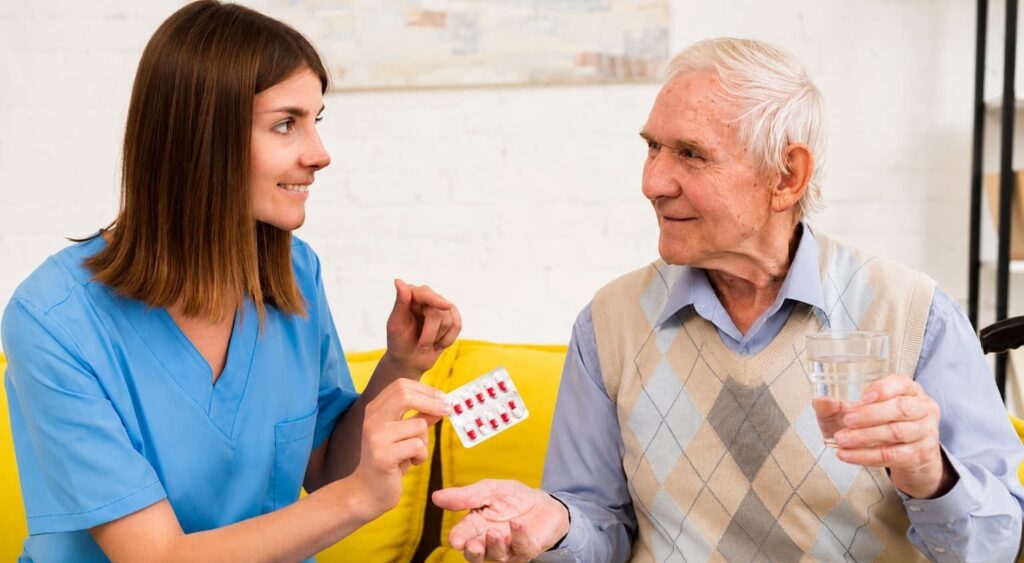
Medication management, for example, is no longer simply about administration. It requires accurate reconciliation after hospital discharge, awareness of prescribing cascades, vigilance around interactions, ongoing review of changing symptoms, and coordinated communication between GPs, pharmacists, nurses, and wider healthcare teams. A single oversight within this chain may not always create immediate visible harm, but over time, fragmented processes can increase avoidable risk.
Similarly, deterioration is not always sudden.
In many cases, it emerges subtly, through changes in appetite, behaviour, mobility, cognition, hydration, or infection markers that require skilled interpretation and timely escalation. Without strong clinical protocols and governance systems, these warning signs may be more difficult to recognise consistently.
These are the hidden spaces where modern care providers must increasingly focus their attention.
Not because teams lack dedication, but because complexity itself has expanded.
This is why clinical governance can no longer be viewed simply as regulatory infrastructure.
It must function as an active framework of protection, capable of strengthening clinical consistency while supporting compassionate care.
Why Reactive Systems Are No Longer Enough
Historically, many healthcare systems have been designed to respond most visibly when deterioration or harm has already occurred.
Yet one of the most important lessons I have learned through my journey as an Independent Prescribing Pharmacist, Advanced Clinical Practitioner, and clinical governance leader is that truly protective care requires a more proactive approach.
Reactive systems may manage crisis.
Proactive systems help reduce the likelihood of crisis developing unchecked.
This distinction matters enormously in care homes, where residents are often among the most clinically vulnerable populations.
Effective governance is therefore not simply about responding appropriately when something goes wrong. It is about embedding infrastructures that support earlier intervention, safer medicines optimisation, stronger infection prevention, robust end of life pathways, and clearer escalation procedures before risk compounds.
At Langdale, much of my role has centred on developing and strengthening these protective layers. This includes implementing enhanced clinical protocols, supporting nursing teams in complex decision making, embedding Advanced Clinical Practitioner principles into care home practice, improving falls and frailty management, strengthening safeguarding pathways, and ensuring that quality assurance becomes an evolving operational culture rather than a periodic exercise.
Importantly, this work is not about adding complexity for its own sake. It is about creating clarity.
When staff are supported by stronger frameworks, they are better positioned to act confidently, escalate appropriately, and deliver increasingly safe care in environments where complexity continues to rise.
The Human Weight Behind Governance
Clinical governance is often discussed in highly technical language, framed through policies, audits, investigations, and compliance structures.
But behind every governance framework lies something far more human. Behind medication reviews are residents whose safety depends on accuracy.
Behind safeguarding protocols are vulnerable individuals whose wellbeing may rely on early recognition.
Behind infection control pathways are opportunities to prevent deterioration before avoidable suffering occurs.
And behind every quality assurance process is a fundamental ethical responsibility: to protect dignity, safety, and trust.
This is why I believe governance must never become detached from care itself. At its best, governance is not bureaucracy.
It is reassurance.
It is the invisible architecture that allows frontline teams to deliver care with stronger confidence, knowing that their decisions are supported by robust systems designed to reduce avoidable harm.
In many ways, good governance functions much like the unseen structural framework of a building. Residents and families may not always see every protocol, escalation tool, or medication review process in action, but its presence helps create stability, safety, and resilience when pressure increases.
This perspective has shaped my own approach significantly.
Whether developing enhanced nursing protocols, mentoring teams, leading investigations, or shaping broader clinical systems, my focus has remained consistent: to strengthen the foundations that protect people long before risk becomes crisis.
Clinical Innovation and the Evolution of Empathika
As care environments become increasingly complex, innovation must also evolve carefully.
Technology on its own cannot replace professional judgement, compassion, or clinical reasoning.
However, when developed thoughtfully alongside real world governance and clinical expertise, it can become a meaningful support mechanism.
This philosophy has also informed my contribution to the wider evolution of Empathika.
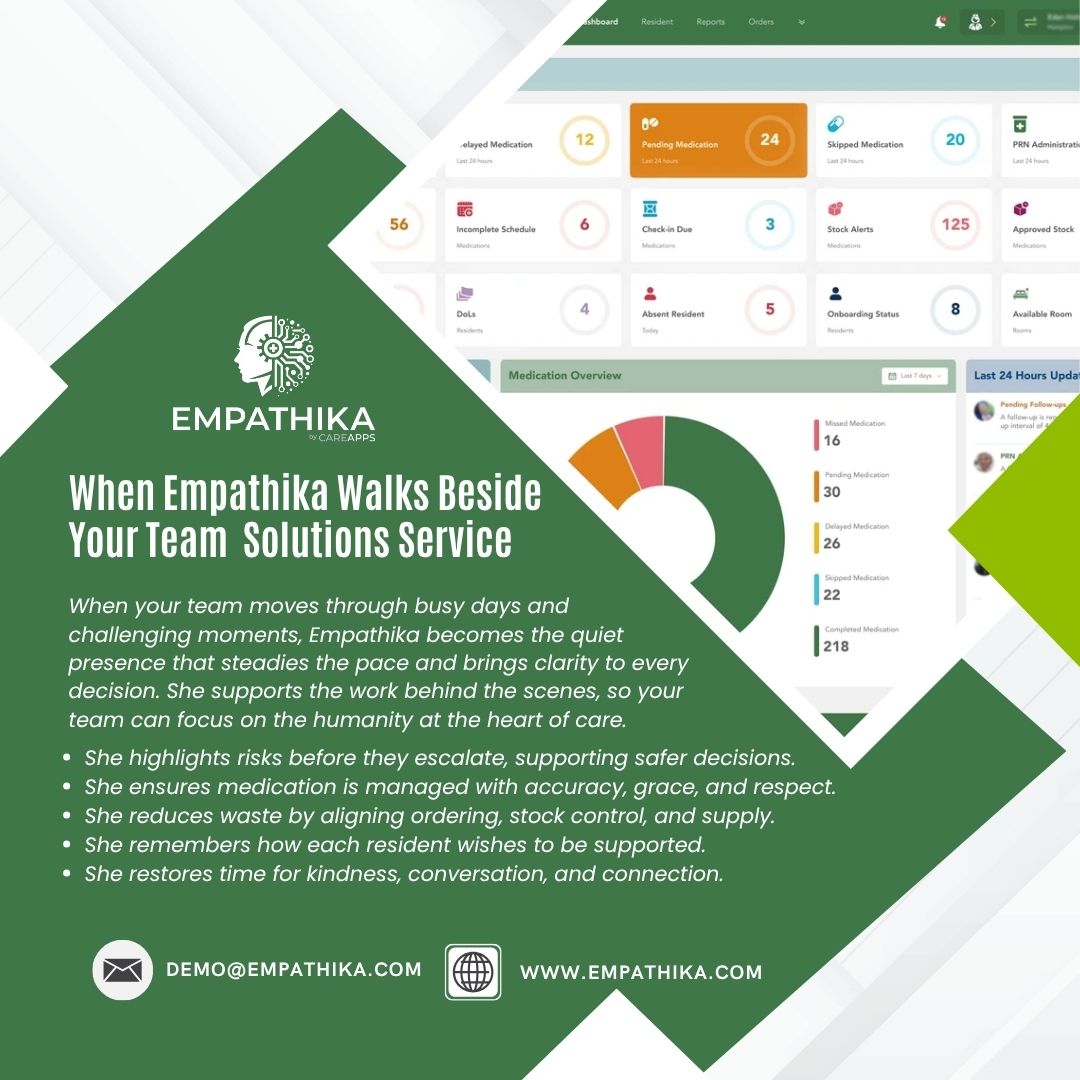
From my perspective, the value of digital innovation within care does not lie solely in digitisation or operational efficiency. Its greatest potential lies in supporting safer governance, improving visibility, strengthening medication frameworks, and helping care teams respond to clinical pressures with greater structure.
My involvement has therefore focused on helping ensure that Empathika’s progression remains grounded in practical healthcare realities, particularly in areas such as medicines management, medication governance, deterioration recognition, escalation pathways, and broader quality assurance support.
This work is not about presenting technology as a replacement for care.
Rather, it is about contributing clinical intelligence to systems that may better support those already carrying immense responsibility.
Where operational tools are informed by clinical governance, they can help reduce fragmentation, strengthen confidence, and support safer consistency across increasingly demanding care settings.
In this way, innovation becomes most meaningful not when it simply adds more features, but when it better understands the risks providers are actively working to manage.
Protecting the Future of Vulnerable Care
Care providers today are operating within a rapidly evolving landscape.
Residents are living longer, often with more advanced and multifaceted health needs. Medication complexity continues to increase. Regulatory expectations are rising. Families rightly expect safety, dignity, and responsive excellence.
Within this environment, hidden clinical risks cannot afford to remain secondary considerations.
Providers must increasingly think beyond immediate task completion and consider the wider systems shaping resident safety every day.
This means investing not only in compassionate teams, but in stronger medicines optimisation, staff education, governance maturity, proactive protocols, multidisciplinary collaboration, and carefully designed innovation.
The future of care will always remain deeply human.
But protecting that humanity requires infrastructures capable of recognising vulnerability earlier, supporting safer decisions consistently, and strengthening teams under growing pressure.
For providers willing to embrace this deeper level of governance, the opportunity is significant.
Not only to meet regulatory expectations, but to help create safer, more sustainable care environments capable of protecting residents more effectively over time.
Final Reflections
For me, clinical governance has never simply been about process. It has always been about people.
It is about recognising that some of the greatest responsibilities in care lie not only in responding to visible emergencies, but in identifying quieter risks early enough to support better outcomes before harm intensifies.
Across community pharmacy, primary care and now care home governance, this principle has remained central to my work.
Because while compassion will always remain at the heart of care, compassion alone must be protected by structures capable of sustaining it safely.
As our sector continues to evolve, providers must sharpen their focus not only on the crises they can see, but on the hidden risks that may otherwise remain unnoticed until consequences deepen.
The providers best positioned for the future will not simply be those who respond well when visible challenges arise.
They will be those who build systems strong enough to recognise and reduce hidden clinical pressures before they become larger threats.
Because in modern care, some of the greatest protections are not always found in the loudest interventions.
They are often built quietly, deliberately, and intelligently, long before crisis ever arrives.

