
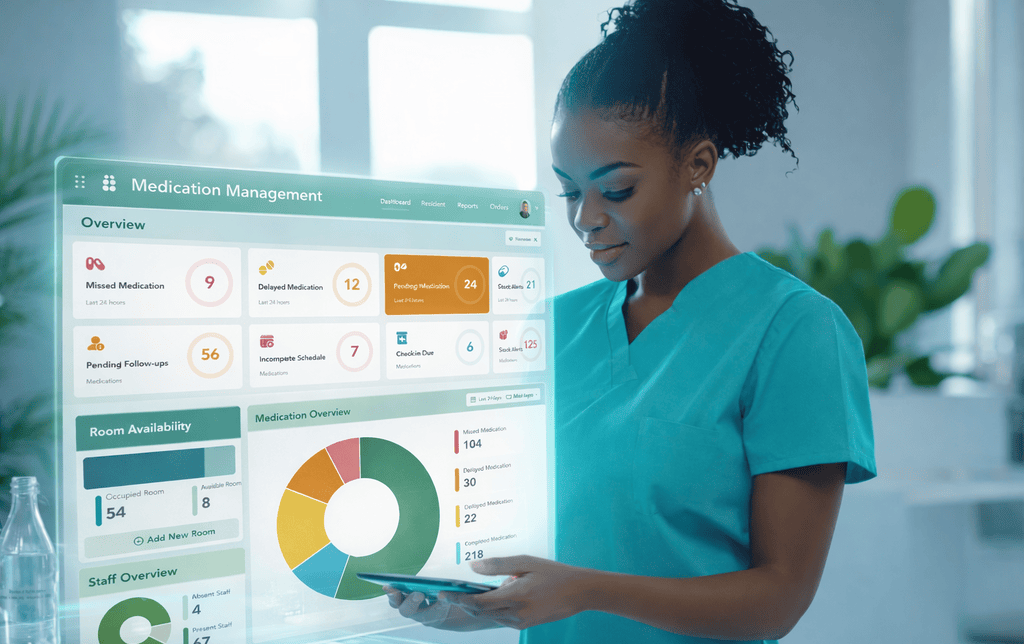
At Langdale Care Homes, medication safety and clinical quality are not just about compliance. They are about vigilance, accountability, and protecting residents every day. This article explains how clinical expertise, strong systems, and technology come together to support safer, more consistent care.
I still remember the moment a nurse stopped mid-sentence and said quietly,
“I know what I need to do. I just need to be sure nothing is being missed.”
That pause stayed with me, because it captured a responsibility shared by every care professional.
When I stepped into the world of care homes, I was not just changing roles. I was stepping into a new purpose.
I have worked across pharmacy, primary care, and clinical leadership for over a decade. I have led teams, written protocols, and shaped services. But it was only when I entered the care home sector that I truly saw the full meaning of care. Raw, real, and deeply human.
Behind every care home door is someone’s loved one. A mother, father, grandparent, a war hero, a poet, a teacher. And in those quiet rooms, where health is fragile and time is precious, our work becomes more than clinical. It becomes personal.
But how do we protect them? Not just from illness, but from system variation, from avoidable risk, and from the possibility of people becoming unseen?
For me, the answer lies in innovation. The kind that puts people first.
Building Safety into the System
When I joined Langdale Care Homes as Director of Clinical Governance and Quality Assurance, I found homes full of heart, alongside significant clinical complexity. More than three hundred residents across seven sites, each with complex and evolving clinical needs.
It was clear that strong systems were needed to support good care. Systems that could identify emerging risk early, support nurses to act promptly, and provide consistent oversight for every resident.
So we built systems to support that responsibility.
We introduced escalation tools that flag early indicators of deterioration, including changes in appetite, behaviour, mobility, and mood. These early signs, when identified promptly, can support earlier intervention and help reduce the risk of falls, seizures, or unplanned hospital admissions.
We developed clear clinical protocols that guide staff through high-risk situations, from infections and frailty to end-of-life care, supporting confident and compassionate decision-making.
We also embedded clinical oversight that goes beyond box-ticking. This includes mentoring, audits, multidisciplinary reviews, and hands-on presence, ensuring staff are supported, with appropriate professional oversight.
Where Technology Supports Care
Alongside this work, my role as Chief Safety Officer at Empathika gave me a wider lens on how systems can support frontline practice.
Drawing on my background as an Advanced Clinical Practitioner, my clinical expertise has been embedded into Empathika’s safety frameworks, with appropriate governance, oversight, and audit processes to ensure safe and ethical implementation.
At Langdale Care Homes, we introduced Empathika not as a replacement for professional judgement, but as a clinical safety support system, particularly within medication management, where responsibility is high and the margin for error is small.
Empathika supports teams by improving visibility of medication-related actions and follow-ups, helping maintain continuity and accountability across shifts. Information is brought together in a single connected view, reducing reliance on memory, paper records, or fragmented systems.
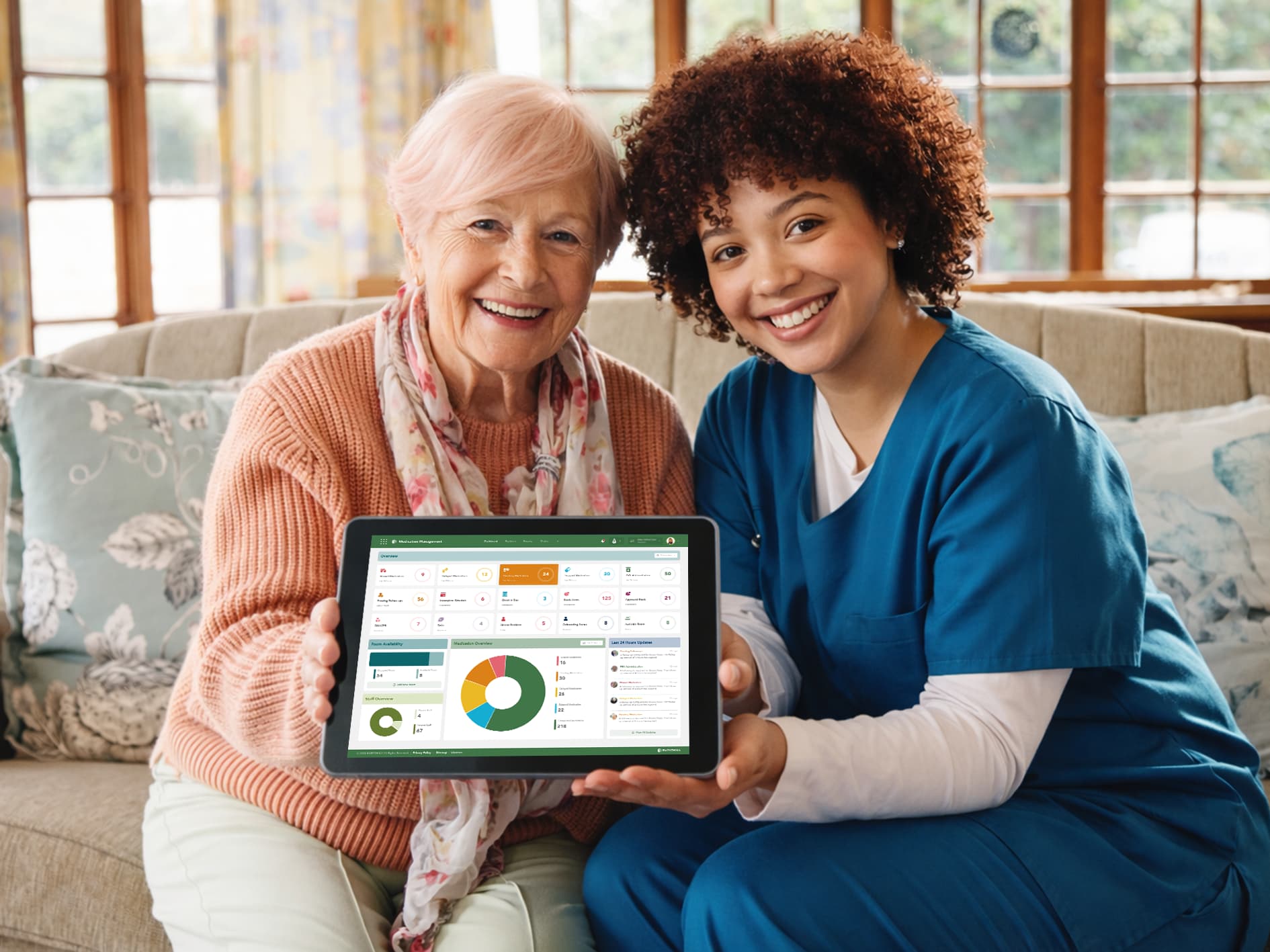
What matters most to me is not the technology itself, but how it supports staff practice. Clearer handovers. Reduced duplication. Greater confidence across shifts. When systems are reliable and consistent, teams are better supported to deliver safe care.
Innovation Is Human
Innovation is often associated with technology, data, and systems. These matter. But meaningful innovation begins with a simple shift: seeing the person first.
In healthcare, it is easy to focus on illness. In care homes, I have learned to focus on the individual. A pressure sore is not just a wound. It may be a sign that someone is in pain but unable to communicate. A medication error is not just a documentation issue. It represents a moment of increased risk.
That is why we have developed monitoring approaches that help us listen more closely, particularly to those who cannot always speak for themselves. We monitor changes in nutrition, weight, mobility, and behaviour to support timely, dignified responses, rather than reactive care.
Empowering the Frontline
Care homes are only as strong as the people delivering care. The nurses, carers, cleaners, and chefs who show up every day with patience, skill, and compassion.
Care work is demanding. It is emotional, physical, and often under-recognised. That is why empowerment is central to our approach. Not just through policies, but through mentorship, training, and trust.
We have built a culture where nurses can say, “I am worried,” and know they will be heard. Where junior staff are encouraged to ask questions, challenge concerns, and share ideas. Where safeguarding is understood not as blame, but as protection.
Clinical Excellence, Compassionately Delivered
Innovation also means bringing clinical excellence into the care home, rather than waiting for it to arrive from outside.
We have embedded advanced clinical assessment and proactive care-planning principles, informed by ACP-level practice, into daily care. This supports evidence-based approaches to falls, frailty, epilepsy, nutrition, and complex medication regimens.
We work closely with general practitioners, pharmacists, dietitians, and mental health services to ensure care remains coordinated, responsive, and person-centred.
The Quiet Victories
Some of the most important outcomes do not appear in reports.
The nurse who identified early signs of sepsis and acted promptly.
The resident with dementia supported safely at home rather than transferred unnecessarily.
The family member who says, “You made the hardest time a little gentler.”
These moments are why innovation matters.
Not because it looks impressive.
But because it protects people when they are at their most vulnerable.
And that is the kind of progress worth building.

